
What your team still controls
Members choose what to list, who to contact and whether to agree a swap. They retain control of the exchange arrangements.
The situation
People often have things they no longer use but still value: clothes, shoes and other everyday items. Selling means writing a listing, deciding on a price and waiting for a buyer. Giving something away does not help you find something you want in return.
We wanted to make swapping straightforward: list what you have, discover something you like and agree on a fair trade. That meant making listings quick to create, matching items of comparable value and keeping both people informed as the swap progressed.
What we built
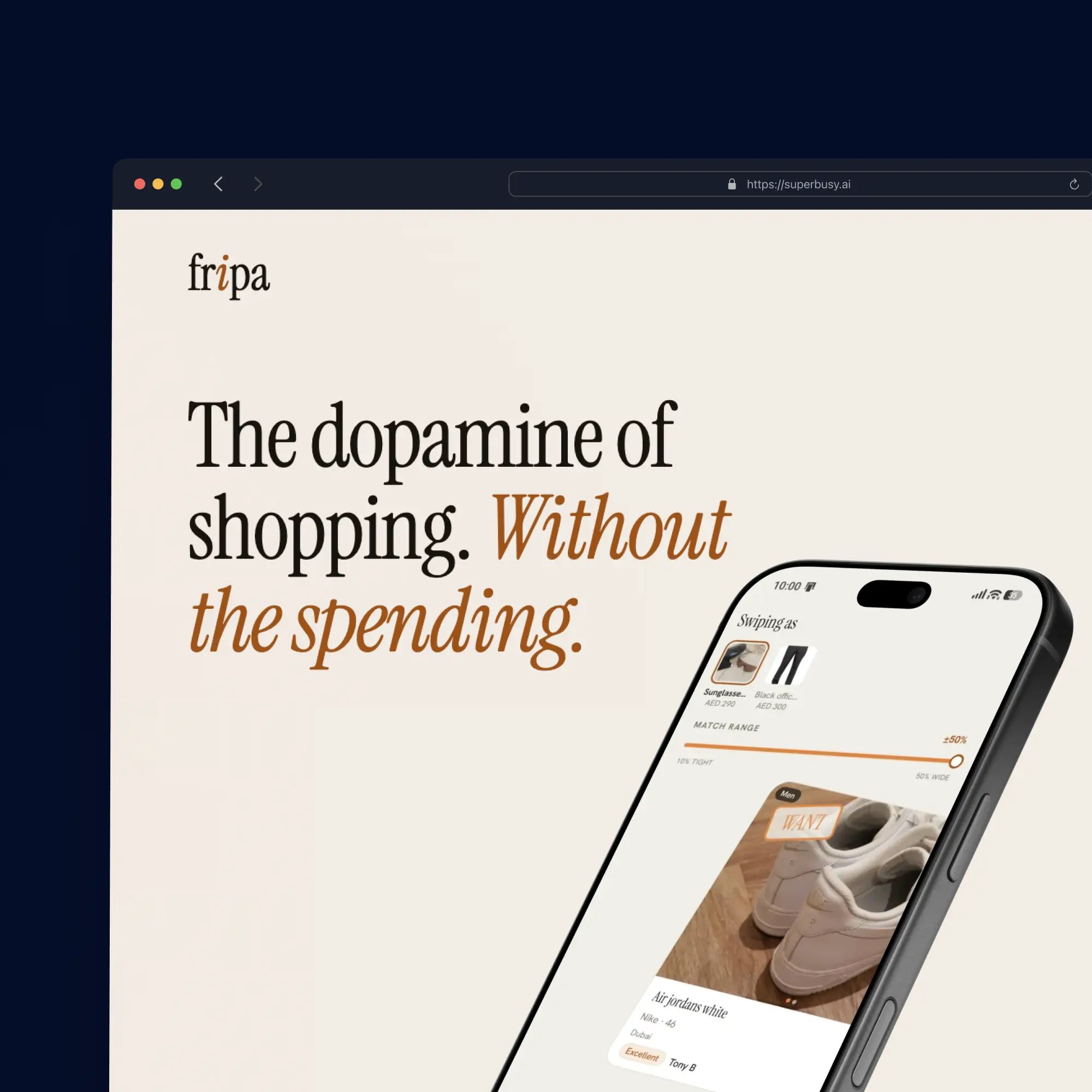
We built Fripa for iOS and Android using React Native on Expo, with a Supabase backend. The app has been live since August 2026 and is distributed in more than 50 markets. Members list items, swipe, match and trade without paying each other.
One photo starts a listing. A Claude vision call drafts the title, brand, category, condition and estimated market value. The member checks the draft before posting. This brings listing preparation down from minutes to around 20 seconds, at approximately $0.003 per draft.
A matching engine in Postgres compares value bands and applies the same fair-trade rules to individual offers, bundles and each stage of the swap. These checks happen on the server, so the rules stay consistent across devices.
We also built six kinds of push and email messages. Each member has send windows, message caps and consent controls. Delivery receipts help track what reached the member, and expired device tokens are retired.
For example, someone photographs shoes they no longer wear. They check the draft listing, discover an item within the matching value range and make an offer. The app keeps the trade state and its messages connected as both people move towards completing the swap.
The decisions that mattered
Start with a photo, then let the member confirm
Writing a listing should not be the hardest part of joining a marketplace. AI prepares the details, while the member confirms the description, condition and value estimate before posting.
Keep fair-trade rules on the server
Offers and bundles can change during a swap. We put value-band matching in Postgres so every stage uses the same rules, rather than relying on checks that only run inside the app.
Make notifications part of the lifecycle
Messages need to arrive at a useful time. Send windows, caps and consent gates control when members hear from Fripa, while delivery receipts and token retirement keep the messaging system maintained.
Measure performance on real devices
We reduced the number of requests per swipe and investigated a growing JavaScript heap. The leak was traced to a gesture library and fixed upstream. This work helped reduce cold-start time by around 40%.
What changed
A two-person team took Fripa from development to a shipped mobile product in eight weeks. It now has 894 members in 10 countries, with distribution in more than 50 markets.
Creating a listing no longer starts with a blank form. A photo produces a draft in around 20 seconds, ready for the member to confirm. Fair-trade checks and lifecycle messages support the steps that follow.
Performance work also reduced the friction of using the app: a swipe now makes one request instead of six, cold starts are around 40% faster, and the gesture-library memory leak has been fixed.
| Metric | Before | After | Change and period |
|---|---|---|---|
| Listing preparation | Minutes of manual entry | ~20 seconds from one photo | AI draft, confirmed by the member |
| Requests per swipe | 6 requests | 1 request | 83% fewer requests per swipe |
| Cold-start time | Original implementation | ~40% faster | Improved during real-device optimisation |