
What your team still controls
Your team checks listing accuracy, prices and seller details before publishing. It decides which machines to include and handles buyer and seller conversations.
The situation
Our client is a team based in Poland. To open a catalog of used forestry machines and parts, they first had to find the right listings on several marketplaces. Each ad was in a different language, with prices quoted with or without VAT and seller details mixed into the text. Doing it by hand meant opening every ad, copying the text and photos into a spreadsheet, translating, and retyping the price: around 10 minutes per listing, or about 20 hours for 120. Sold items stayed online, and one wrong VAT figure was enough to lose a buyer’s trust.
What we built
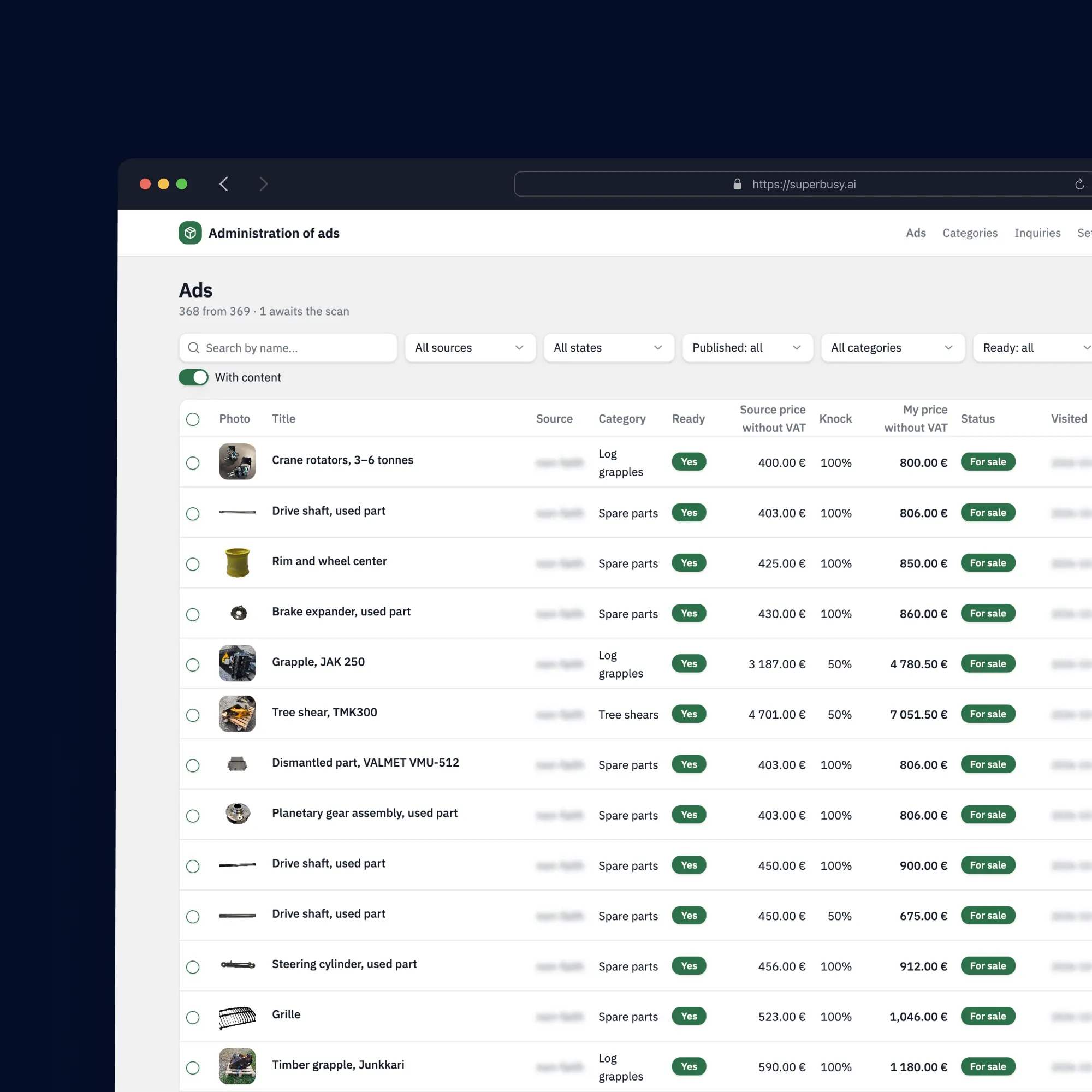
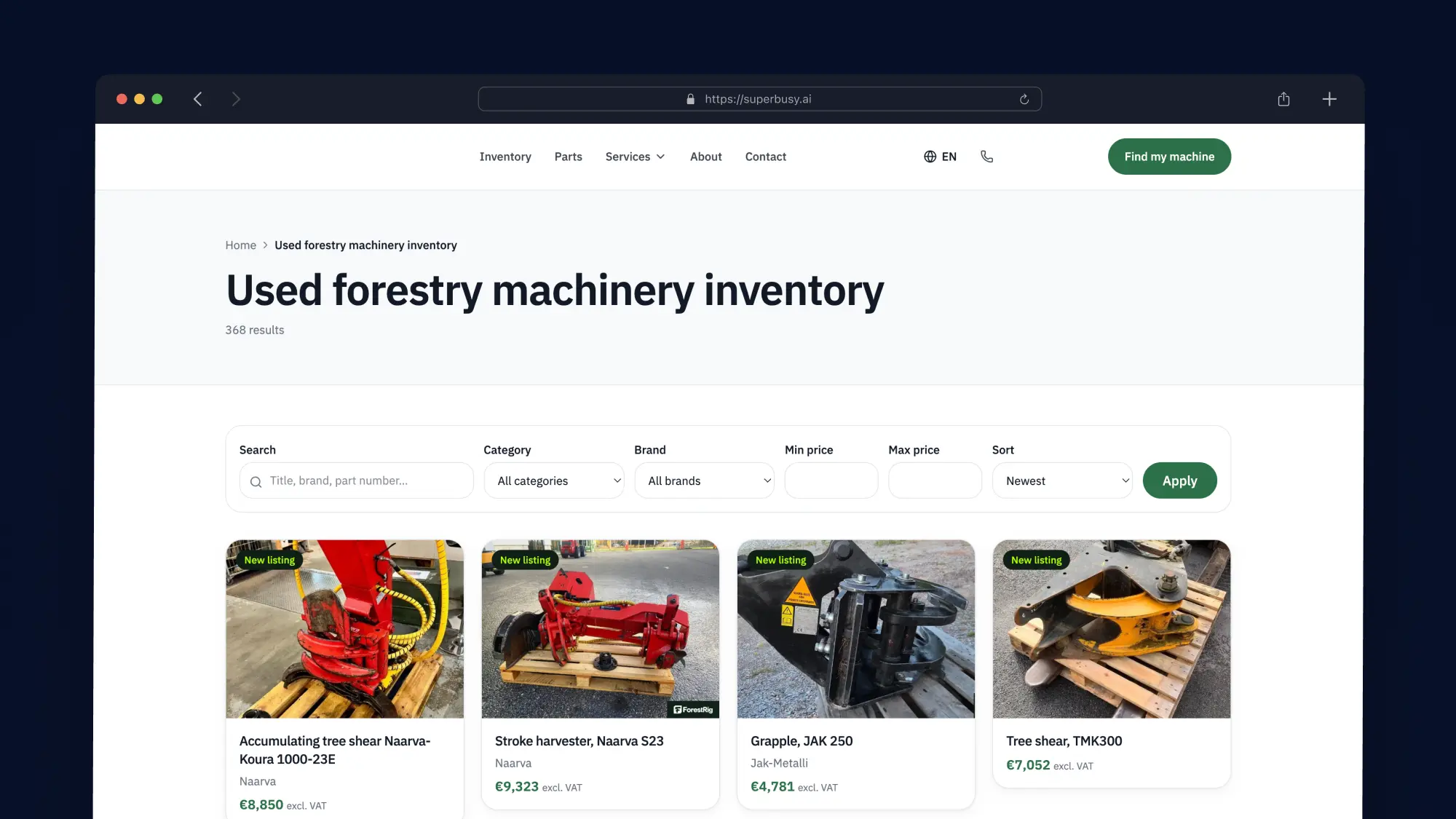
We built three parts that work together. A small importer reads listing pages on a schedule, picks up new ads, refreshes prices and marks sold ones as removed. An admin panel shows each ad in its original form next to the future catalog listing. A public website shows the finished catalog in English, Polish, Spanish and Russian, with search, categories and an inquiry form.
Say the importer added 20 new ads overnight. You open one and press Translate and generate. The AI reads the original text and drafts an English title, a short description, a category and the specs. It leaves out seller names, locations, phone numbers and warranty promises, and never adds facts the ad does not contain. You read the draft, fix a word if needed, and press Save and publish. The listing goes live with the client’s own copies of the photos and a price shown without VAT. Buyers send an inquiry from the page, and it lands in the admin inbox.
The decisions that mattered
Keep private details private
Location and VAT figures stay in the admin. A filter strips contact details, links and seller codes from anything public. An early draft copied a location and a VAT line into a public spec table, so we closed that door. Visitors see one clean listing; the team keeps the full record.
Show every price without VAT
Every price on the site is shown without VAT. Sources mix both, so the importer reads the net price from each ad when it exists, and flags ads where the VAT status is unclear. Buyers abroad compare like with like, and the team sees a warning instead of guessing.
Remove the approval step
The first version asked for four actions: generate, approve, switch on, save. Now it is Translate, then Save and publish. A listing still cannot go live without an English title, a description, a photo and a category.
Make the importer forgiving
The importer saves its progress every ten listings and retries when the connection drops. Early runs lost everything when one request failed. Now a single failed photo is skipped and retried next time, and a long outage stops the run cleanly, so no work is lost.
What changed
For the team, collecting listings stopped being a job. One run reads a whole result list, picks up what is new, refreshes prices and marks sold machines as unavailable, leaving a short queue of drafts to read. Prices are consistent, so buyers compare like with like, and the same listing is available in four languages. Nobody has to remember which ads were already checked. The hours once spent copying and retyping now go to answering buyers and finding more machines to list.
| Metric | Before | After | Change and period |
|---|---|---|---|
| Time to publish 120 listings | About 10 minutes each, roughly 20 hours | About 38 seconds each, roughly 1 hour 15 minutes | About 19 hours saved per batch of 120 |
| Actions per listing | 4: generate, approve, switch on, save | 2: Translate, Save and publish | 50% fewer clicks on every listing |
| Checking new, changed and sold ads | About 1 minute per ad, roughly 6 hours for 366 ads | About 26 minutes across 13 result pages, unattended | About 5.5 hours saved per full check |