
What your team still controls
Transport managers verify records, correct missing information and decide whether a trip is ready. They retain compliance decisions and can inspect the sources behind findings.
The situation
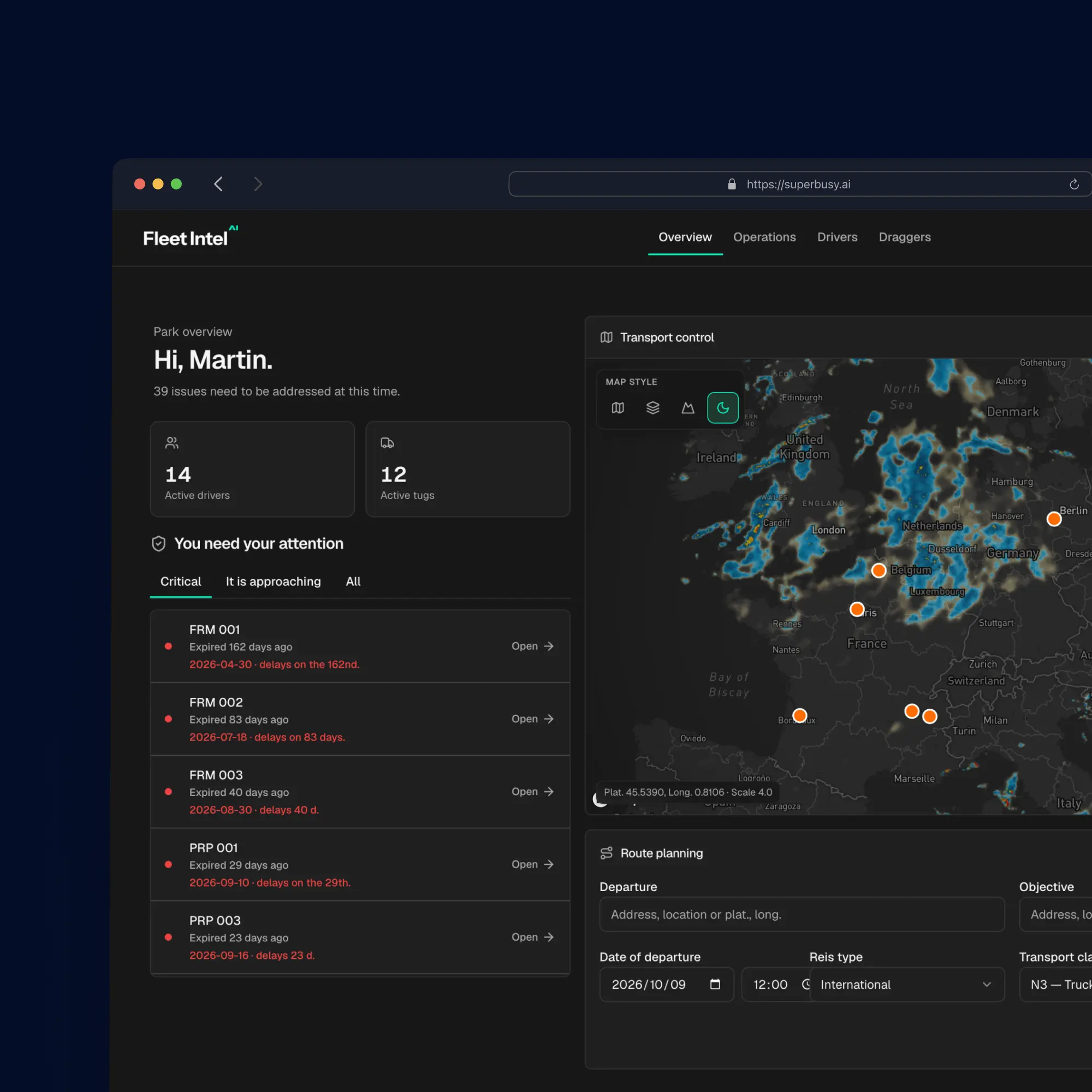
Transport managers already have plenty of information. Their transport system holds orders and assignments, personnel records hold driver documents, and telematics shows vehicle activity. The difficult part is deciding what that information means for a particular journey.
A licence might be valid today but expire while the driver is away. A domestic delivery might need earlier transport history before anyone can assess it properly. Checking these details means opening records, comparing dates and asking colleagues for context.
We saw an opportunity to support this work without building another transport management system. FleetIntel would focus on compliance questions and the situations that need a person’s attention.
What we built
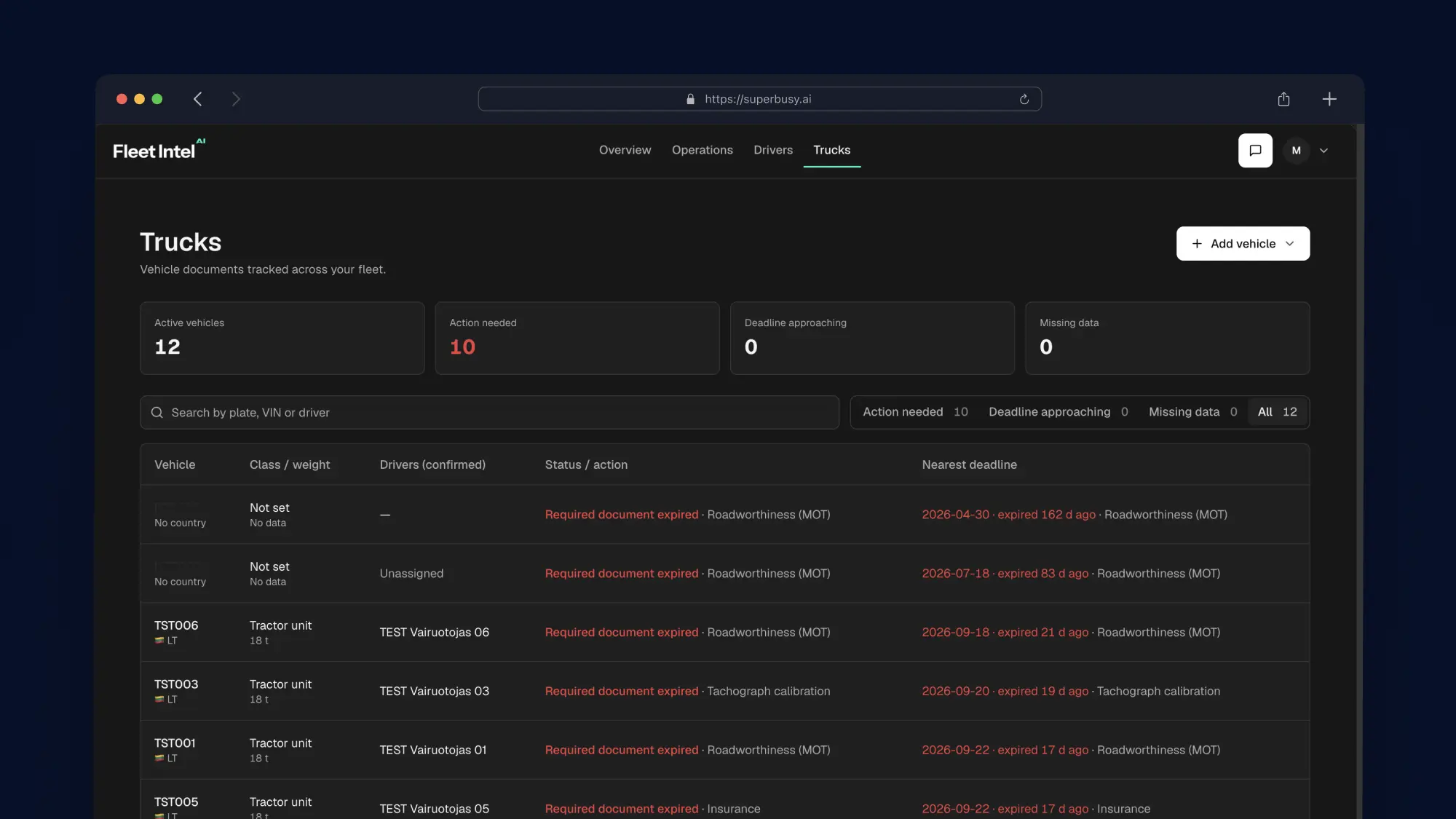
We built a working MVP with connected driver, vehicle and trip records. Teams can add information manually and use CSV imports for driver and vehicle registers. Each person and vehicle has a consistent detail panel with documents, dates and assignments.
A trip brings those records together with its schedule, transport operations and loading or unloading stops. The system analyses EU Mobility Package regulations in the context of the driver, vehicle and journey. Document readiness and cabotage are part of that wider analysis, with missing history and incomplete operation details shown alongside findings.
For example, a manager plans a journey ending on 11 October. The assigned driver’s qualification expires on 3 October. FleetIntel highlights the mismatch inside the trip, rather than leaving the manager to compare those dates manually.
A large trip view contains findings and a chronological history. Managers can correct information and run the checks again. An AI assistant answers questions using a specialist legal source library, while date comparisons and rule calculations remain separate from AI-generated explanations.
The decisions that mattered
Give the overview a clear job
We made the home screen a summary of situations needing attention, with critical findings shown first. Detailed data gaps stay close to driver and vehicle records. This gives managers a useful starting point without turning the overview into a long list of incomplete fields.
Check the journey, not just today’s date
A document can be valid when a trip is created and still expire before the assignment ends. We connected document dates to the planned assignment period, so the manager sees a relevant readiness problem instead of a reassuring but incomplete “valid” label.
Make incomplete information visible
Early cabotage tests exposed missing loading dates, incomplete unloading records and unconfirmed vehicle assignments. We made those reasons visible in the result. A manager can see what prevents a check from completing, rather than mistaking an absence of findings for a successful assessment.
Keep the full story inside the trip
We used a vertical timeline to bring together operational events, record changes and check results. Driver and vehicle details use smaller side panels, while trips get more space. This reflects the difference between reviewing one record and understanding a journey involving several connected records.
What changed
The MVP changed the way a journey can be reviewed. Driver documents, vehicle documents and transport events now sit within a connected workflow. A manager can open a trip, see the relevant findings and inspect the information behind them.
Testing also helped us make the product more honest about its limits. Incomplete history produces a clear explanation of what is missing. Document checks consider the assignment period, rather than validity on the day of review. The analysis covers the EU Mobility Package rather than being limited to two trip checks. Customer time savings and operational impact remain part of the next validation stage.
| Metric | Before | After | Change and period |
|---|---|---|---|
| Connected operational registers | Driver records and vehicle documents were reviewed separately; no linked trip register | 3 connected registers: drivers, vehicles and trips | Added trip-level context during the MVP build |
| Trip compliance analysis | No compliance analysis attached to a dedicated trip record | EU Mobility Package analysis with supporting journey context | Broader regulation analysis connected to each trip |
| Consolidated trip history | 0 unified trip timelines | 1 timeline per trip for events, changes and checks | Added a single review history during the MVP build |